Contact The Biggs Firm

Contact The Biggs Firm
Odessa Truck Accident Lawyer
 A crash with an 80,000-pound commercial truck can change your life in an instant, leaving you with serious injuries, growing medical expenses, lost wages, and months of recovery. Along the busy highways of the Permian Basin, truck accidents often involve complex liability issues and insurance claims that go far beyond a typical car accident.
Our team at The Biggs Firm represents people hurt in commercial truck wrecks throughout Odessa and the wider West Texas oil patch. Real answers matter more than a polished pitch when a big carrier is lined up against you. Call 432-201-3524 or contact us online for a free consultation today.
Truck Accident Lawyers Serving Odessa and West Texas
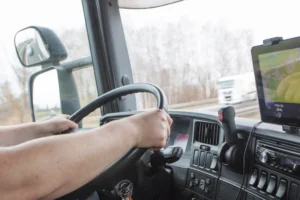
Our Odessa truck accident lawyer stays fixed on your recovery, your bills, and the pressure a trucking company’s insurer will apply to close your claim cheaply. Drawing on more than 30 years of courtroom work, The Biggs Firm meets that machinery head-on with a single point of contact who knows your file.
Trucking companies deploy investigators to the scene within hours, and you need someone moving just as fast. Our firm answers that speed with local knowledge and a refusal to cut corners.
Common Causes of Truck Accidents in Odessa
Most truck wrecks trace back to preventable decisions rather than bad luck, including:
- Fatigued drivers pushing past hours-of-service limits
- Unrealistic delivery schedules
- Skipped brake and tire maintenance
- Poorly secured cargo
- Distraction behind the wheel
These all appear again and again in Permian Basin crash investigations. Identifying the cause early points the claim at the right defendants and the right records.
Semi-Truck and 18-Wheeler Accidents in West Texas
Interstate 20 carries a constant stream of loaded semis through Odessa, and a fully loaded 18-wheeler needs far more distance to stop than the passenger cars around it. When a big rig rear-ends stopped traffic or jackknifes across lanes, the injuries at the point of impact are rarely minor. These cases also bring federal safety regulations into play, which opens evidence that a standard car wreck never produces.
Oilfield Truck Accidents in Odessa
Heavy Oilfield Traffic in the Permian Basin
The oil patch keeps county roads full of heavy trucks moving equipment, crews, and product around the clock. Rural two-lane roads built for light traffic now carry constant commercial loads, and the crash numbers reflect it.
Driver Fatigue and Long Shifts
Oilfield schedules push drivers through long shifts and back-to-back rotations. A driver at the end of a stretch of overnight hauls reacts more slowly than the law and basic safety demand, and fatigue shows up in logs, dispatch records, and timelines our team knows how to pull.
Oversized Loads and Equipment
Rig moves and equipment hauls put oversized loads on narrow roads. When an escort is missing, a load shifts, or a wide trailer crowds the center line, the vehicles sharing that road pay the price.
Sand Hauler Truck Accidents and Frac Sand Truck Crashes
What Is a Sand Hauler?
Sand haulers carry frac sand from mines and transload facilities to well sites. They run heavy, they run constantly, and they run on tight delivery windows.
Fracking Industry Traffic Risks
Every active well site pulls dozens of sand truck trips per day through the same rural intersections. That volume turns ordinary crossroads into repeat crash locations.
High-Speed Rural Highway Collisions
Loaded sand trucks moving at highway speed on two-lane roads leave little room for error. Head-on and passing-zone collisions in these corridors are among the most severe wrecks our team sees.
Water Truck Accidents in the Permian Basin
Water trucks serve drilling and completion operations across the Basin, often driven by workers pushed onto the road with minimal training. A loaded water truck handles poorly, stops slowly, and rolls easily on caliche roads and highway shoulders. The companies operating them are commercial carriers with commercial responsibilities, regardless of what the truck looks like.
Commercial Vehicle Crashes Involving Company Fleets
Delivery Trucks
Local and regional delivery fleets crowd Odessa’s commercial corridors, and delivery pressure produces the same claims as long-haul trucking on a smaller scale.
Company Pickup Trucks
A crew pickup owned by an oilfield contractor is still a company vehicle. When an employee driving a company vehicle causes a wreck on the job, the employer’s commercial policy is in play.
Construction Vehicles
Dump trucks, concrete mixers, and equipment haulers working in construction sites carry the same heavy-vehicle risks and the same commercial coverage questions.
Employer Liability Claims
Texas law can hold an employer responsible for a crash its employee causes in the course of work. Negligent hiring, minimal training, and ignored driving records can support direct claims against the company itself, separate from the driver’s own fault.
Injuries Commonly Sustained in Truck Accidents
The force of a commercial truck collision produces injuries at the severe end of the scale, including:
- Traumatic brain injuries and concussions
- Spinal cord damage and paralysis
- Broken bones requiring surgical repair
- Internal organ damage and internal bleeding
- Severe burns from fuel or cargo fires
Many of these injuries carry treatment timelines measured in years, which is why claim value depends so heavily on future medical proof.
Who Can Be Held Liable After a Truck Accident?
Fault in a truck crash rarely stops with the driver behind the wheel. A single collision can implicate several companies at once, each pointing fingers to dodge responsibility. Potential defendants in a commercial wreck often include:
- The driver who broke a traffic law or drove fatigued
- The motor carrier that pushed unrealistic delivery schedules
- The company that loaded or secured the cargo
- A maintenance contractor that ignored brake or tire defects
- The manufacturer of a failed part or safety system
Because multiple parties may share responsibility, each often has its own insurance coverage and legal representation. Identifying every potentially liable party early can expand the available sources of compensation, so our team moves quickly to preserve evidence and determine who should be held accountable.
Trucking Companies and Oilfield Contractors Often Carry Large Insurance Policies
Commercial carriers and oilfield operators carry coverage far beyond a personal auto policy, sometimes layered across multiple insurers. More extensive coverage means larger defense resources, and insurers protect big policies aggressively. It also means a properly built claim has real room to account for catastrophic losses instead of settling for a personal-policy ceiling.
Evidence That Can Strengthen Your Truck Accident Claim
Truck cases live and die on records that vanish unless someone demands them. Federal and state rules force carriers to keep specific documents, but only for set periods. Sending preservation letters right away protects the proof your claim depends on.
Texas requires commercial trucking companies to follow strict safety standards. Under Texas Transportation Code § 644.051, the state adopts federal motor carrier safety regulations governing driver qualifications, hours-of-service limits, and vehicle maintenance. When a trucking company fails to meet those requirements, evidence of those violations may include:
- Electronic logging device data showing driving hours
- Driver qualification and training files
- Truck maintenance and inspection records
- The carrier’s dispatch and communication logs
- Post-crash drug and alcohol test results
Some of this data disappears in as little as six months under standard retention schedules. Acting before those windows close can mean the difference between a provable violation and a company’s word against yours.
What Compensation Can Be Recovered After a Truck Accident?
The value of a truck accident claim depends on the seriousness of your injuries and the evidence supporting your case. No attorney can accurately predict a settlement without reviewing the facts. Compensation may include:
- All medical and future healthcare costs
- Long-term or in-home care needs
- Lost income and diminished future earnings
- Physical pain and emotional suffering
- Property damage to your vehicle
A skilled review of these categories matters most for injuries that never fully heal, where future costs dwarf the first round of bills. Insurers routinely undervalue anything without an immediate receipt, so building the full picture of your losses protects what you can actually collect.
Wrongful Death Claims After Fatal Truck Accidents
Losing a family member in a truck wreck opens two distinct legal paths, and families often pursue both. One claim compensates surviving relatives for their loss, while another lets the estate recover for what the victim endured before death.
Texas keeps a deceased person’s own claim alive through the estate. Under Texas Civil Practice and Remedies Code § 71.021, a personal injury action survives in favor of the heirs and estate, allowing recovery for the medical bills and suffering your loved one faced before passing. That survival claim runs alongside a family’s wrongful death claim, and handling both correctly can bring the household meaningful financial stability.
How Long Do You Have to File a Truck Accident Lawsuit in Texas?
Texas Civil Practice and Remedies Code § 16.003 gives you two years from the date of the crash to file suit, and the deadline applies to wrongful death claims measured from the date of death. Truck cases need that time, as preserving carrier records, identifying every defendant, and building expert support all take months, so early action protects both the evidence and the deadline.
Why Choose The Biggs Firm for Your Odessa Truck Accident Case?
Born in Midland and raised in Odessa, our attorney understands the roads, industries, and local perspective that often shape Ector County cases. That local experience is matched by a meticulous approach to every claim, including a $4.5 million settlement in a case that a larger firm had previously overlooked.
Honesty drives the whole process, which is why our firm turns away illegal case-running schemes and treats every client with plain, direct guidance, including full Spanish-speaking service and an answering line that picks up after hours.
Speak With an Odessa Truck Accident Lawyer Today
The trucking company’s investigators are already at work protecting its bottom line. A local advocate who answers the phone and treats your case as more than a claim number can level a very uneven fight.
Our team at The Biggs Firm puts direct, honest guidance behind the people the freight industry would rather overlook. Call 432-201-3524 or contact us online for a free consultation while the trucking company’s records are still within reach.

I am a Viet Nam veteran. I have thyroid problems due to Agent Orange, and I gained a great deal of weight. I was injured at a large department store when a display of lawn furniture I sat on suddenly collapsed because it was not fully assembled. The store blamed the accident on my weight. Nevertheless, Brent A. Biggs was able to obtain compensation for me due to my back injury.
After my commercial building was damaged by hail, my insurance company failed to pay the full amount of damage to the HVAC units on my building. Brent A. Biggs threatened a lawsuit and negotiated with the insurance company until I was able to obtain a full recovery of my damages.
Our son was diagnosed with cancer. After his diagnosis, an insurance salesman sold us a small life insurance policy when he had full knowledge of my son’s cancer. He told us that the insurance company would cover us anyway. He never sent our application or payments to the insurance company. They denied our claim after our son died. Brent A. Biggs was able to obtain the full benefits under the policy. We were able to have a final funeral and purchase a proper headstone for our son.
My husband was killed in a work-related accident. Brent A. Biggs represented me against the insurance company. We went to trial in front of a jury against a team of insurance lawyers, paralegals and assistants. The jury found in our favor due to the representation of Brent A. Biggs, and I received compensation for the remainder of my natural life.


You must act quickly if you are hurt or are facing litigation. Once you contact me, I will immediately begin protecting your rights, including preserving crucial evidence, reaching out to witnesses and taking the necessary steps to hold the negligent parties accountable.

Get In Touch
Fields Marked With an "*" are Required
"*" indicates required fields
© 2026 The Biggs Firm. All Rights Reserved.
